

What Makes a High-Performing Website? A Practical Guide for Small Business Owners

Table of Contents
Key Takeaways
- High-performing websites aren’t just fast — they’re clear, structured, and easy to use.
- Good performance improves SEO, conversions, and user satisfaction.
- Clean navigation and simple layouts help users take action faster.
- Small updates like better hosting, caching, and content hierarchy go a long way.
A high-performing website is more than good design or quick loading times.
It’s a combination of speed, structure, clarity, mobile experience, and technical health — all working together to create a smooth, trustworthy experience for your visitors.
Many small business websites look nice on the surface but still struggle with low engagement, poor rankings, or slow conversions. The reason usually isn’t the design — it’s the underlying performance.
Let’s break down what actually makes a website “high-performing” and how you can use these principles to improve your own.
1. Speed Matters More Than Ever
Fast websites consistently outperform slow ones.
Speed impacts:
- bounce rate
- conversions
- SEO
- perceived trust
- mobile usability
Even a 1–2 second delay can dramatically reduce conversions.
Common fixes include:
- upgrading hosting
- using proper caching
- compressing images
- optimizing CSS/JS files
- lazy-loading heavy assets
- removing unnecessary plugins
Small business tip: Hosting is one of the biggest wins. Switching to a fast WordPress host often cuts load times in half.
2. Clean Structure Improves Clarity and User Flow
A high-performing site isn’t just technically sound — it’s easy to navigate.
Clear structure includes:
- simple, intuitive navigation
- consistent layout patterns
- scannable content sections
- headings used intentionally
- no visual clutter
Users should never wonder, “Where do I click next?”
Good structure guides them effortlessly toward services, contact forms, or booking.
3. Content Hierarchy Helps Users Take Action
Your content needs to be easy to digest.
Strong hierarchy looks like:
- clear H1 → H2 → H3 structure
- short paragraphs
- bolded key points
- logical spacing
- CTAs placed intentionally
This helps users understand your value fast — especially on mobile.
4. Mobile Experience Is Now the Default Experience
More than 60% of website traffic is mobile.
If your mobile layout feels squeezed, unbalanced, or confusing, users won’t stay.
High-performing mobile sites:
- load fast
- use readable text sizing
- avoid tiny buttons
- keep spacing comfortable
- prioritize scroll-friendly layouts
Google also uses mobile-first indexing — meaning a poor mobile experience = poor SEO.
5. Strong Technical Foundations Keep Your Site Healthy
Technical health matters just as much as visuals.
Key technical elements include:
- clean code
- lightweight themes
- minimal plugin bloat
- proper schema markup
- secure HTTPS
- optimized database
- error-free internal linking
- regularly updated CMS/plugins
When your site is technically sound, everything else works better — including SEO and conversions.
6. SEO-Friendly Development Helps You Rank Longer Term
SEO isn’t just content or backlinks — development plays a huge role in long-term ranking.
Development choices that boost SEO:
- fast load times
- optimized images
- proper HTML structure
- alt text for images
- clean URLs
- sitemaps & robots.txt
- logical site architecture
A high-performing website is one that search engines can easily understand and reward.
7. Good Design Still Matters — But Only With Purpose
Great visuals help, but only when they support functionality.
Design should:
- highlight key content
- create trust
- reduce friction
- improve readability
- strengthen branding
High-performing websites are visually clean, modern, and purposeful — not overloaded with unnecessary effects.
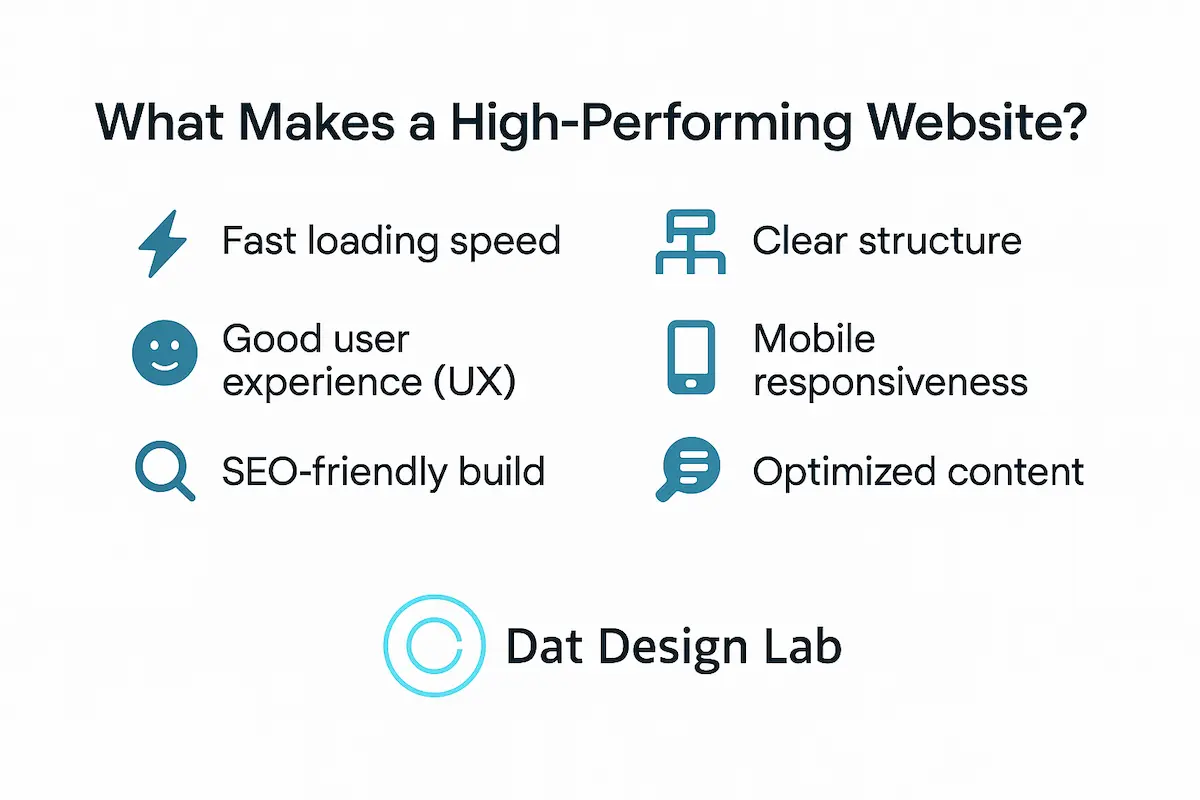
Putting It All Together
A high-performing website is built on four pillars:
- Speed
- Structure
- Usability
- Technical health
You don’t need a complex redesign to improve performance.
Often, 3–5 strategic updates can transform both user experience and search visibility.
You don’t need a full rebuild or an expensive agency to improve your website’s performance. Even small development updates—faster hosting, cleaner layouts, simplified navigation, and technical fixes—can make a measurable difference in how users experience your site.
If you’re looking to improve your site’s speed, structure, or overall performance, you can explore my Website Development services for a practical, hands-on approach.
To see everything I offer, visit the full services page or return to the home page to learn more about how I design fast, clear, conversion-focused digital experiences.
If you’re planning a project or need guidance on where to start, feel free to contact me — I’d be happy to help.